Standardised Reman Fundamentals: Inspection Rules Before Any Rebuild Work
Introduce
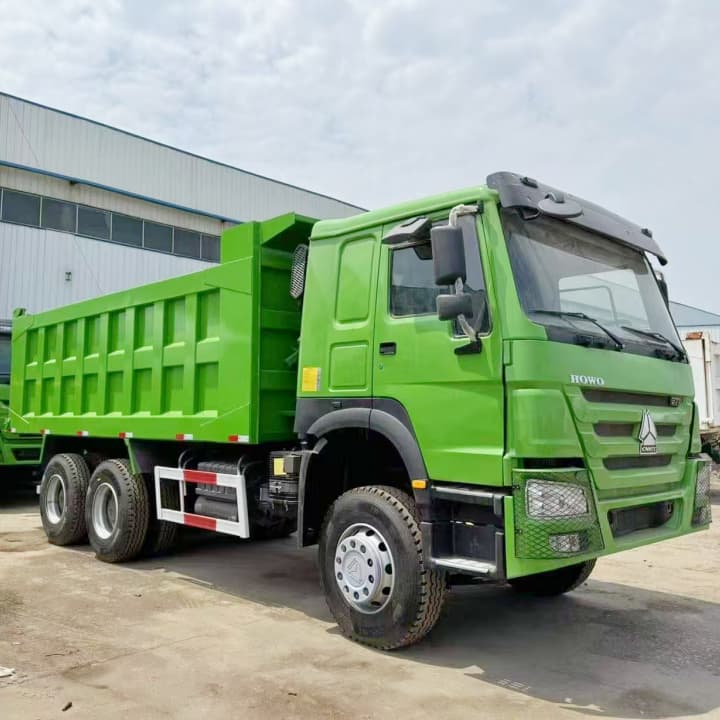
Many people picture remanufacturing as a process starting with disassembly, cleaning and part replacement. In the REMAN ROAD standardised remanufacturing framework, however, the most decisive stage happens before a single rebuild task commences. Pre-rebuild inspection is the gatekeeper of the entire lifecycle-reset reman workflow. Its purpose is not to list faulty parts for repair, but to judge whether the heavy truck still possesses the inherent structural and systemic capacity to support a full second lifecycle. Vehicles failing this gate will be diverted to recycling rather than entering reman work. This article outlines the core inspection rules that form this critical first filter.
The core principle: whole-vehicle eligibility assessment, not fault troubleshooting
Conventional maintenance inspection targets known faults and worn parts. Pre-rebuild inspection for standardised reman follows a different logic.
- Inspectors evaluate the truck as an integrated heavy asset, rather than compiling a repair checklist.
- The central question is not “what is broken?”, but “can this vehicle be reliably restored back to its original OEM design specification?”
- Even a truck with few obvious defects may be rejected if hidden cumulative fatigue reduces its safety margin below the acceptable threshold.
- Conversely, a truck with many visible worn components may still qualify, provided its load-bearing structure and core system foundations remain sound.
This principle separates standardised reman pre-screening from pre-repair diagnosis. It is an asset qualification audit, not a service quotation assessment.

Structural integrity inspection: the highest priority gate
Load-bearing structure is non-negotiable, because fatigue damage to frame, cab mountings and force-bearing joints cannot be fully offset by replacing powertrain components.
- NDT (non-destructive testing) is mandatory for key stress zones of the chassis frame, checking for subsurface cracks, fatigue propagation and hidden corrosion. Visual checks alone are not sufficient evidence.
- Inspect corrosion depth, section loss and deformation of the frame. Any deformation beyond OEM allowable tolerance eliminates the vehicle from reman eligibility.
- Cab mounting points, suspension brackets and axle connection interfaces are also assessed for permanent distortion and crack risk.
- A truck that fails structural screening stops here. No amount of component overhaul can restore its fundamental structural safety reserve.
Historical service and damage record review
Service history acts as contextual evidence to support physical inspection results.
- Review original mileage, operating environment, overload records and past accident repair files.
- Any record of major collision, frame straightening, improper welding modification or overloading far beyond design limits raises a red flag.
- Unknown or undocumented heavy damage creates too much uncertainty about residual fatigue life. Under REMAN ROAD rules, such vehicles are generally excluded from whole-vehicle reman.
- Consistent operating history on suitable routes supports more accurate judgement of remaining asset capacity.
Core system baseline screening
Before disassembly, inspectors run a quick integrated baseline check of major systems to rule out irreversible systemic degradation.
- Powertrain: capture current performance curves, abnormal blow-by and internal wear indicators without full teardown.
- Brake and steering: test braking balance, steering free play and hydraulic or air circuit stability.
- Electrical and after-treatment systems: verify whether ECU, sensors and emission hardware retain the capacity to be recalibrated to OEM standards.
- This reman work step identifies systems with widespread, irreversible ageing that would make restoration economically or technically impractical.
It avoids wasting workshop resources on assets that cannot reach the required final specification.
Compliance and specification matching check
Pre-rebuild inspection also confirms regulatory and model-level feasibility.
- Confirm the vehicle model’s original emission class and whether it can be restored to meet the target market’s roadworthiness rules.
- Check whether spare parts, calibration files and technical drawings remain available for this platform. Obsolete models without accessible technical support are difficult to standardise.
- Flag vehicles with extensive factory modifications that alter the original design envelope. Such units cannot be labelled OEM-spec reman even after rebuild.
Documentation of inspection evidence for traceability
All pre-rebuild inspection outcomes must be recorded and bound to the vehicle VIN.
- Capture NDT reports, frame measurement data, service history summaries and system test readings.
- Record pass or fail decisions clearly, with reasoning attached for rejected assets.
- These records become the starting point of the vehicle’s reman traceability file, available for later internal quality audits and third-party verification.
- Without this documented baseline, there is no objective proof that the rebuild work started from a qualified asset.
Clear outcome routes after pre-rebuild inspection
Every truck has one of three defined results once the inspection is completed:
- Qualified for standardised remanufacturing: Proceed to disassembly, grading and restoration following REMAN ROAD reman work gates.
- Conditional with restrictions: Rarely approved; only permitted under special documented limits and will carry a non-standard reman label, not full OEM-spec certification.
- Rejected for reman: Directed to material recycling or component harvesting, with no whole-vehicle lifecycle reset permitted.
Closing Summary
Pre-rebuild inspection is the foundational gate of standardised remanufacturing. Its rules prioritise whole-vehicle structural residual capacity over cosmetic or component faults. Under REMAN ROAD, inspection happens before any rebuild work begins, to filter out assets that lack the safety margin to complete a predictable second lifecycle. Skipping or simplifying this stage turns standardised remanufacturing into uncontrolled rebuilding, and undermines the core trust of the whole circular heavy-asset ecosystem.