
Can Reman Vehicle Match New-Vehicle Performance?
Overview
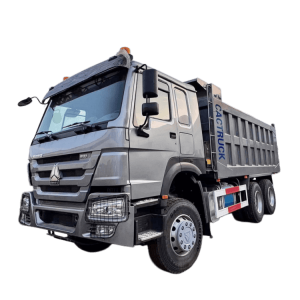
Many fleet operators, contractors and procurement teams hold this core doubt when evaluating reman vehicles. It is easy to mix up true remanufacturing, overhaul and surface refurbishment. The core conclusion: Vehicles produced under formal, standardized remanufacturing systems can reach the original OEM design performance indicators of new vehicles in core working dimensions. However, this equivalent performance is not inherent to every rebuilt truck; it is guaranteed by strict process control and full validation. REMAN ROAD builds unified reman criteria to quantify performance standards, helping buyers make decisions based on objective test results instead of subjective descriptions.
Table of Contents
- What Does “Matching New-Vehicle Performance” Really Mean?
- The Full Reman Process That Enables New-Equivalent Performance
- Clear Boundaries: Performance Matched, But Not Identical To New Trucks
- Common Reasons Why Some Reman Units Fail To Match New Performance?
- Business Value For Heavy-Duty Fleets When Performance Is Matched
- How Buyers Can Verify Whether A Reman Vehicle Reaches New-Vehicle Performance?
- REMAN ROAD Standard On Reman Vehicle Performance
Related Articles
What Does “Matching New-Vehicle Performance” Really Mean?
This section clarifies the definition of equivalent performance, avoiding exaggerated marketing claims.
Power & Torque Benchmark
- Certified reman vehicles must hit the OEM-rated power and peak torque curve.
- Under rated load, power output and torque response keep consistent with the new vehicle’s design curve on dynamometer tests.
Safety-Related Performance
- Braking distance, ABS response, steering clearance, suspension load capacity all comply with the original vehicle’s factory test requirements. Safety performance is non-negotiable.
Fuel & Thermal Performance
- Fuel consumption under standard working conditions, engine temperature control, cooling system efficiency are calibrated to new-vehicle thresholds.
- No abnormal high fuel burn or overheating caused by sloppy assembly.
Emission Standard Compliance
- The whole powertrain and after-treatment system are restored or upgraded to meet target emission regulations, same as the new vehicle’s legal requirement.
What It Does NOT Mean?
- Matching performance does not mean identical remaining service life, or that every single component is brand-new.
- It refers to overall system output and working performance, rather than full identical component composition.
The Full Reman Process That Enables New-Equivalent Performance
Every reman process link controls performance; skipping any step will create performance gaps.
Step 1: Core Receiving & Pre-Evaluation
- Incoming core vehicles go through full functional scanning.
- We record original fault codes, wear status and accident history.
- Cores with irreparable structural damage are rejected directly before entering reman.
Step 2: Complete Disassembly (Not Partial Repair)
- The whole vehicle is fully torn down to individual components, including engine, transmission, axle, frame, braking, electric and cooling systems.
- We do not only replace obviously broken parts.
Step 3: Precision Dimensional & Material Inspection
- All reusable core parts are measured with precision tools.
- Cylinder block, crankshaft, axle housing, frame and other key structural parts are checked for deformation, cracks and tolerance deviation.
- Any part out of tolerance is scrapped.
Step 4: Restoration or Standard Replacement
- Wear consumables (seals, bearings, piston rings, brake pads, gaskets, filters) are all replaced with OEM-grade new parts.
- Qualified cores receive professional machining (boring, honing, grinding) within OEM allowable limits.
Step 5: System Recalibration
- Engine ECU, transmission control unit, ABS, cruise control and after-treatment systems are reset and recalibrated back to original OEM parameter settings.
- Mismatched calibration is a top cause of poor reman performance.
Step 6: Multi-Stage Bench & Road Testing
- Dynamometer load test, static brake test, leakage inspection, road simulation test and emission test are carried out.
- The same pass/fail criteria for new vehicles are applied.
- Units failing any test go back for rework.
Step 7: Final Quality Sign-Off & Record Archiving
- Each finished reman vehicle gets a full test report, recording all performance data for traceability.
Clear Boundaries: Performance Matched, But Not Identical To New Trucks
Even with equivalent working performance, there are inherent differences buyers need to understand.
Reusable Core Structure vs All-New Raw Materials
- Frame, cylinder block, axle housing are qualified reused core components, while new vehicles are built with 100% newly manufactured parts.
- The structural foundation is reused, but validated.
Remaining Service Cycle Difference
- When properly maintained, certified reman vehicles typically achieve 80%–90% of the designed service life of a brand-new truck.
- This is the most important distinction for long-term fleet planning.
Warranty Framework Difference
- Certified reman vehicle warranty schemes are designed separately from OEM new-vehicle warranties.
- Coverage periods and included components are defined by the reman quality system.
Controlled Upgrade Opportunities
- During reman assembly, compatible mature engineering upgrades can be fitted.
- In some cases, the certified reman vehicle may deliver better reliability than the original old factory configuration.
Common Reasons Why Some Reman Units Fail To Match New Performance
Poor performance is caused by low standards, not the remanufacturing model itself.
Using Uninspected Mixed Used Parts
- Suppliers source random second-hand spare parts without dimensional testing, assembling them directly.
- Hidden wear will lead to power drop and early failure.
Partial Repair Instead of Full Reman
- Only fixing reported faults, ignoring hidden wear in transmission, cooling or braking systems.
- Performance will degrade quickly under heavy load.
Low-Grade Aftermarket Consumables
- Cutting costs by using non-standard seals, liners and filters.
- These cheap parts cannot sustain long-duration heavy-duty working conditions.
Skipping Calibration & End Testing
- Assembly finished without ECU reset, dynamometer validation or emission inspection.
- The vehicle may run roughly, consume extra fuel or trigger fault codes.
No Unified Acceptance Standard
- Workshops follow personal experience instead of written OEM-aligned standards.
- Performance varies wildly between individual rebuilt vehicles.
Business Value For Heavy-Duty Fleets When Performance Is Matched
This section connects technical performance to fleet total cost of ownership.
Stable Uptime For Core Operations
- Consistent power, braking and reliability support mining, construction and long-haul transport schedules, avoiding unexpected downtime.
Significant Upfront Capital Saving
- Compared with purchasing brand-new heavy trucks, certified reman vehicles deliver matching working performance at a much lower acquisition cost.
More Predictable Reliability Than Casual Used Trucks
- A used truck’s condition is unknown, while standardized reman comes with test records and defined quality gates. Risk is greatly reduced.
Lower Carbon & Resource Footprint
- Standardized remanufacturing saves raw material and energy consumed in new component production, supporting circular economy and carbon reduction targets.
Flexible Fleet Renewal Strategy
- Fleets can expand or renew working assets without the large capital outlay required for all-new vehicle purchases.
How Buyers Can Verify Whether A Reman Vehicle Reaches New-Vehicle Performance?
Practical checkpoints for procurement teams when auditing reman suppliers.
- Request full test documentation: dynamometer report, brake test result and emission certificate.
- Confirm whether the reman process includes full disassembly and component metrology, not just overhaul.
- Check the specification of replacement parts: OEM-grade standard or generic low-cost aftermarket parts.
- Clarify calibration procedure: whether ECU and all electronic systems are restored to original OEM parameters.
- Confirm warranty coverage, excluded items and after-sales support terms before order confirmation.
REMAN ROAD Standard On Reman Vehicle Performance
- We establish unified, traceable reman performance standards for heavy commercial vehicles, aligned with OEM design specifications.
- Every vehicle under the REMAN ROAD reman system must pass the same performance acceptance indicators as its original new model.
- We separate standardized remanufacturing from simple overhaul and cosmetic refurbishment through transparent test data.
- Our standard system guides the whole industry to avoid performance exaggeration, helping the circular heavy vehicle market develop orderly.