
Industrial Reman Vehicles Remanufacturing Standards
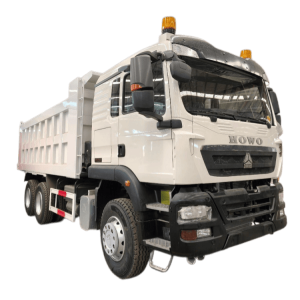
Overview
Genuine vehicle remanufacturing is not simple cosmetic refurbishment. It follows a complete set of measurable, repeatable industrial standards to restore heavy assets to defined performance and safety specifications. These unified benchmarks set clear boundaries between authentic reman vehicles and superficial renovation work, delivering reliable regenerated assets for global buyers.
Table of Contents
- Base Unit Qualification Standard
- Full Disassembly & Deep Cleaning Standard
- Component Restoration & Replacement Standard
- Standardized Reassembly Standard
- Multi-Stage Performance & Safety Testing Standard
- Traceability & Documentation Standard
- Post-Delivery Quality Benchmark
- Remanufacturing VS Refurbishment: Essential Industry Differences
- Core Operational Advantages of Reman Vehicles
- REMAN ROAD: Brand Positioning, Core Standards & Development Vision
Base Unit Qualification Standard
Before reman starts, raw base units must pass strict screening to confirm structural feasibility for regeneration.
Structural Integrity Inspection
- Frame and load-bearing components are checked for cracks, metal fatigue, deformation and welding damage. Units with irreversible structural failure are rejected directly.
Core Component Audit
- Engines, axles and hydraulic assemblies are assessed to judge whether they can be restored to standard performance. Severe corrosion or permanent damage disqualifies the base unit.
Service History Review
- We review prior usage, accident logs and maintenance records to rule out assets with hidden long-term damage.
Full Disassembly & Deep Cleaning Standard
All qualified base units undergo complete teardown, not partial disassembly.
Complete Teardown
- The whole vehicle is fully disassembled down to individual component level. No assembly group remains unopened for hidden inspection.
Industrial Deep Cleaning
- All metal parts go through professional cleaning to eliminate grease, rust, sediment and surface contaminants, exposing tiny cracks and wear invisible on dirty components.
Component Sorting
- Cleaned parts are classified into reusable, repairable and scrap categories, with written records for every piece.
Component Restoration & Replacement Standard
Every component must meet measurable performance thresholds before reuse.
Non-Destructive Testing
- Key load-bearing parts use NDT inspection to detect internal defects without destroying components.
Precision Restoration
- Eligible worn parts are repaired using industrial machining, surfacing and heat treatment to restore original dimensional tolerances.
Mandatory Renewal
- All consumable and high-risk wear parts get brand-new replacements, including seals, bearings, gaskets and brake components.
Standardized Reassembly Standard
Reassembly strictly follows OEM assembly specifications and torque requirements.
Step-by-step Assembly Procedure
- Reassembly follows fixed process sequence to avoid assembly errors.
Torque Control
- All bolts and fasteners are tightened to standard torque values with calibrated tools.
System Matching
- Powertrain, hydraulic, braking and electrical systems are matched and adjusted to work in coordination.
Multi-Stage Performance & Safety Testing Standard
Finished reman vehicles pass layered testing before delivery.
Bench Component Test
- Restored core components are individually tested on benches before vehicle assembly.
Full-Vehicle Dynamic Test
- Completed vehicles run load tests, braking tests and hydraulic system tests to verify performance.
Safety Verification
- Inspection covers structural safety, braking reliability and electrical safety to meet defined safety benchmarks.
Traceability & Documentation Standard
Every reman vehicles maintains full lifecycle records.
Process Archive
- Store inspection reports, test data, component replacement logs and repair records for each unit.
Unique Identification
- Each regenerated asset carries a unique identifier linking to its complete reman file.
Transparent Report
- A reman certificate is provided to buyers, showing what parts were restored, replaced and tested.
Post-Delivery Quality Benchmark
The standard extends beyond factory handover.
Warranty Specification
- Clear warranty terms aligned with reman quality standards.
Quality Tracking
- Operational feedback from fleet clients is collected continuously to iterate and upgrade reman benchmarks.
Remanufacturing VS Refurbishment: Essential Industry Differences
The market is flooded with fake reman products disguised by refurbishment. The essential gap between the two lies in technical logic, restoration depth, quality standards and delivery reliability, which directly determines fleet operational safety and long-term profitability.
Technical Logic Difference
- Refurbishment: Based on “fault repair”, only repair visible faults, replace damaged parts and optimize appearance. It belongs to passive maintenance and cannot solve hidden aging and structural fatigue.
- Vehicle Reman: Based on “overall regeneration”, take the whole vehicle as the object, eliminate all aging and fatigue problems in a targeted manner, and actively restore overall performance to factory standards.
Restoration Depth Difference
- Refurbishment: Local disassembly, partial replacement, focus on exterior vision, retain most aging components and original structural defects.
- Vehicles Remanfacturing: 100% full vehicle disassembly, full component inspection, full fatigue elimination, full vulnerable part renewal, zero omission of hidden dangers.
Quality Standard Difference
- Refurbishment: No unified standard, rely on mechanic experience, no fixed tolerance data, no strict testing system, unstable vehicle quality.
- Vehicle Reman: Follow OEM original drawings, torque standards and performance parameters, with complete testing procedures and standardized delivery indicators.
Traceability & After-Sales Difference
- Refurbishment: No file records, unclear replacement parts, no quality guarantee, no after-sales restriction.
- Vehicles Remanufacturing: Full-process file archiving, clear component replacement records, test report support and formal industrial warranty protection.
Reman vehicles bring multi-dimensional value improvement for fleet operation from safety, cost, stability and asset management, which is the core reason why more and more global fleets abandon used/refurbished vehicles and choose industrial reman vehicles.
Significant Full-Lifecycle Cost Reduction
- Reman truck avoids the high depreciation loss of new trucks and the high hidden maintenance cost of old vehicles.
- With standardized quality control, it effectively reduces unplanned expenditure and realizes precise control of fleet operating costs.
- Reman trucks eliminate frequent emergency repairs and downtime losses, bringing stable and predictable full-lifecycle economic benefits for large-scale fleet operation.
Excellent Residual Value & Stable Asset Preservation
- Different from rapidly depreciating new trucks and depreciating disorderly old trucks, reman vehicles have standardized reman records and verified performance, with stable residual value and transparent asset evaluation.
- When fleets need asset iteration and equipment renewal in the future, reman truck for sale have higher transfer value and lower asset loss rate, realizing long-term asset preservation and appreciation.
Strict Safety Control for Harsh Working Conditions
- Aiming at the high-risk characteristics of mining and construction sites, vehicle reman completely eliminates structural cracks, brake failure risks and hydraulic hidden dangers, ensuring stable and safe operation under heavy-load, bumpy and high-frequency working cycles.
- Every key load-bearing structure and safety-related assembly is strictly inspected and restored to factory safety standards, effectively reducing on-site safety accidents caused by equipment aging.
Strong Adaptability & Customizable Working Condition Matching
- Industrial vehicles remanfacturing supports targeted restoration and configuration optimization according to different working conditions such as mines, quarries and earthwork projects.
- Whether it is frequent heavy-load lifting, long-distance haulage or complex road operation, remanufactured dump truck for sale can be adjusted and optimized pertinently to achieve higher working condition adaptability than ordinary standardized vehicles.
Standardized Asset Management Support
- Complete vehicles remanufacturing archives make vehicle maintenance and asset assessment traceable, helping fleets realize standardized, digital and refined asset operation management.
- Clear component replacement records and test data support scientific maintenance scheduling and regular asset evaluation, greatly improving fleet management efficiency.
Stable Continuous Production Efficiency
- Multi-stage factory testing ensures low on-site failure rate, avoids construction stagnation and cargo delay caused by sudden vehicle breakdown, and guarantees continuous and efficient operation of engineering projects.
- The overall vehicle coordination and working stability are restored to near-new levels, fully adapting to high-intensity uninterrupted construction schedules.
Green & Sustainable Circular Asset Model
- Industrial vehicles remanufacturing realizes the reuse of high-quality industrial equipment resources, reduces resource waste and carbon emissions, and conforms to the global green circular economy development trend.
- It helps engineering enterprises obtain greener, low-carbon and environmentally friendly fleet asset allocation while ensuring construction capacity.
Reliable After-Sales & Technical Service Guarantee
- Different from unguaranteed second-hand and refurbished trucks with no after-sales support, standardized reman vehicles come with formal industrial warranty and professional global technical support.
- The standardized reman system ensures unified after-sales standards, clear fault judgment and efficient solution efficiency, completely solving the after-sales blank problem of traditional used engineering vehicles.
REMAN ROAD: Brand Positioning, Core Standards & Development Vision
REMAN ROAD take remanufacturing technology, standardized process system and quality control as the core, and heavy-duty equipment regeneration as the landing carrier, committed to solving the long-standing quality chaos and cost risks in the global engineering equipment renewal market.
Accurate Brand Positioning
- REMAN ROAD is a standard‑oriented industrial remanufacturing enterprise, not a vehicle sales dealer or equipment refurbishment workshop.
- Our strength lies in developing & rolling out measurable OEM-aligned reman benchmarks, quality standards and full-lifecycle asset rules.
- We create unified evaluation metrics for the fragmented heavy equipment reman sector, shifting the industry away from cosmetic refurbishment.
- With transparent, repeatable reman standards, we help global buyer source qualified regenerated assets and unlock green circular asset value.
Core Brand Principles
- Standardization First, Reject Fake Reman: Adopt OEM technical standards as the sole guideline, discard casual renovation, and guarantee near-new performance for every regenerated unit.
- Technology-Driven Regeneration: Use professional disassembly, cleaning, fatigue removal, precision repair and calibration to restore core performance, instead of simple part swapping.
- Full Transparent Quality Traceability: Archive full-process records for all reman projects to deliver verifiable restoration and eliminate information gaps in used equipment trade.
- Customer Value-Centric: Cut fleet full-lifecycle costs, remove operational safety risks and boost asset returns, delivering stable, cost-effective reman assets.
Brand Vision & Mission
- Mission: Standardize global industrial equipment remanufacturing, delivering low-cost, low-risk, high-value circular asset solutions for worldwide buyers.
- Vision: Become a global benchmark for standardized industrial remanufacturing. Drive the heavy equipment reman industry from rough renovation to standardized technical regeneration, and lead the global green circular equipment economy.
- Core Competitive Advantage: Our standardized reman system forms a closed loop covering vehicle screening, production, performance testing and after-sales support. Clients obtain OEM-grade equipment at reasonable cost, achieving cost reduction, risk mitigation and efficiency gains.